Light Chambers: The Art of Sound
A monumental 9.5-metre Indian ink scroll investigating acoustical frequency, solar alignment, and spatial immersion.
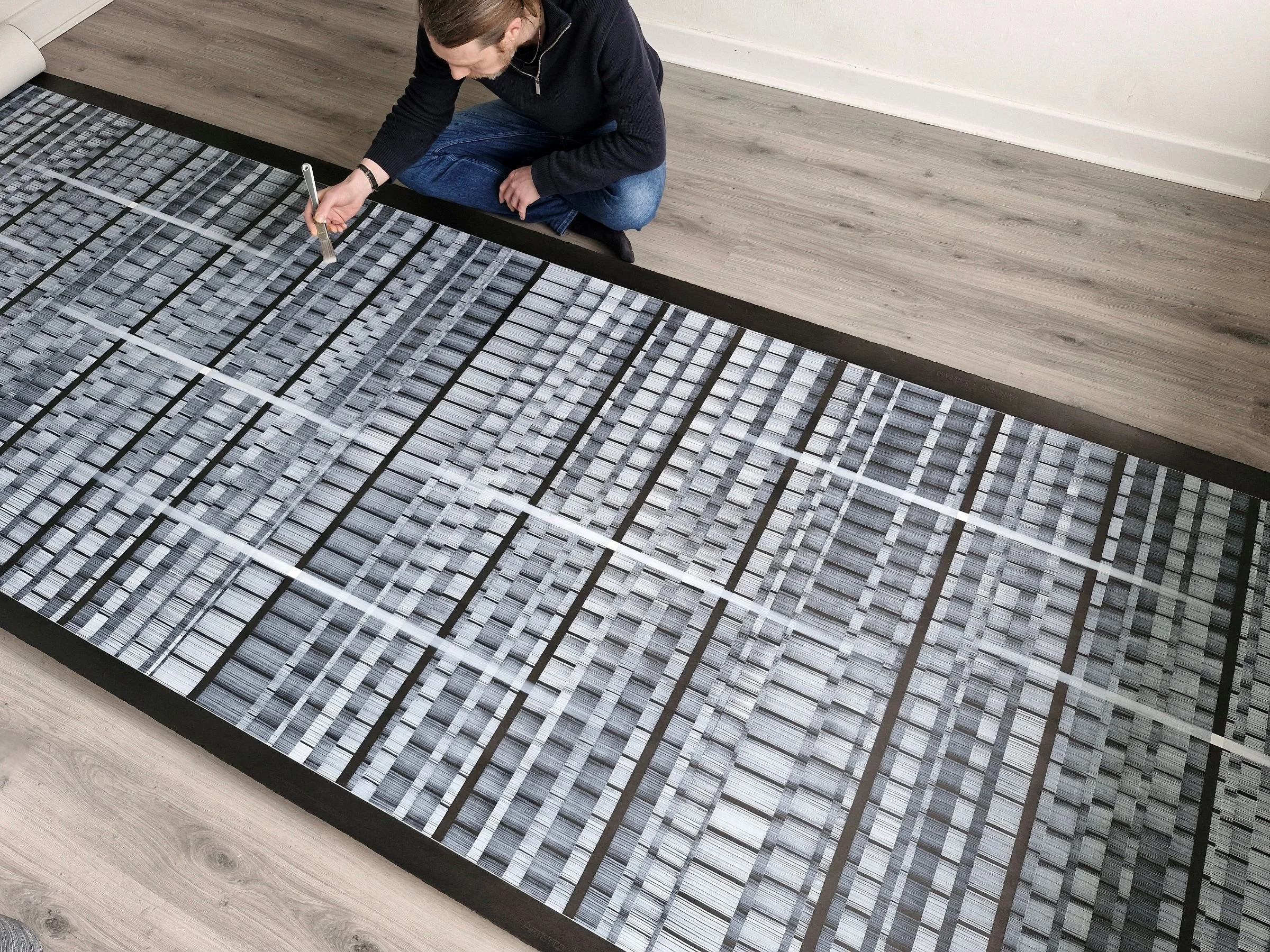
Light Chambers: The Art of Sound
Light Chambers: The Art of Sound (2026) is the monumental centerpiece of Anthony Wigglesworth’s new ink series. Created with Indian ink on a single 9.5-meter roll of paper, this piece geometrically captures how winter sunrise light and sound travel through County Meath’s ancient Newgrange. Operating at a precise 1:2 architectural scale, the composition compresses the ancient monument’s 19-meter stone passage into a high-resolution visualisation of solar and sonic energy propagation, honoring a prehistoric design that synthesised astronomy, geometry and acoustics.
Drawing on his background in Music and Media Technologies (M.Phil., Trinity College Dublin), Wigglesworth treats the paper as an active site of temporal engineering. Across the 9.5 -meter expanse, 35 black chambers house 17 solar nodes plotted on successive odd intervals to mimic a damped harmonic oscillation. This complex geometry simultaneously traces the physical trajectory of the winter solstice light and maps the 111 Hz standing wave, the internal acoustic frequency of the monument scientifically linked to the induction of altered states of consciousness. As the viewer traverses the length of the scroll, the ink marks climb the vertical plane in a symmetrical triangular ascent that mirrors the corbelled vaulting of the Newgrange inner sanctum, replicating the exact moment the narrow stone corridor expands into the soaring ritual chamber.
Light Chambers | The Art of Sound
The execution relies on Wigglesworth's signature technique of material depletion, where he deliberately withholds ink to force the medium to naturally thin, fade and fracture. This process maps a literal transition from structural order to entropy, turning thousands of incremental, modular marks into a high-fidelity recording of duration. The resulting dense line work generates intense moiré interference and optical aliasing, creating a vibrational hum that flickers and shifts as the viewer moves. The Art of Sound ultimately collapses astronomical time into physical space, fixing the fleeting, 17-minute energy of a 5,000-year-old solar alignment into a permanent, visceral field of optical and mathematical resonance.
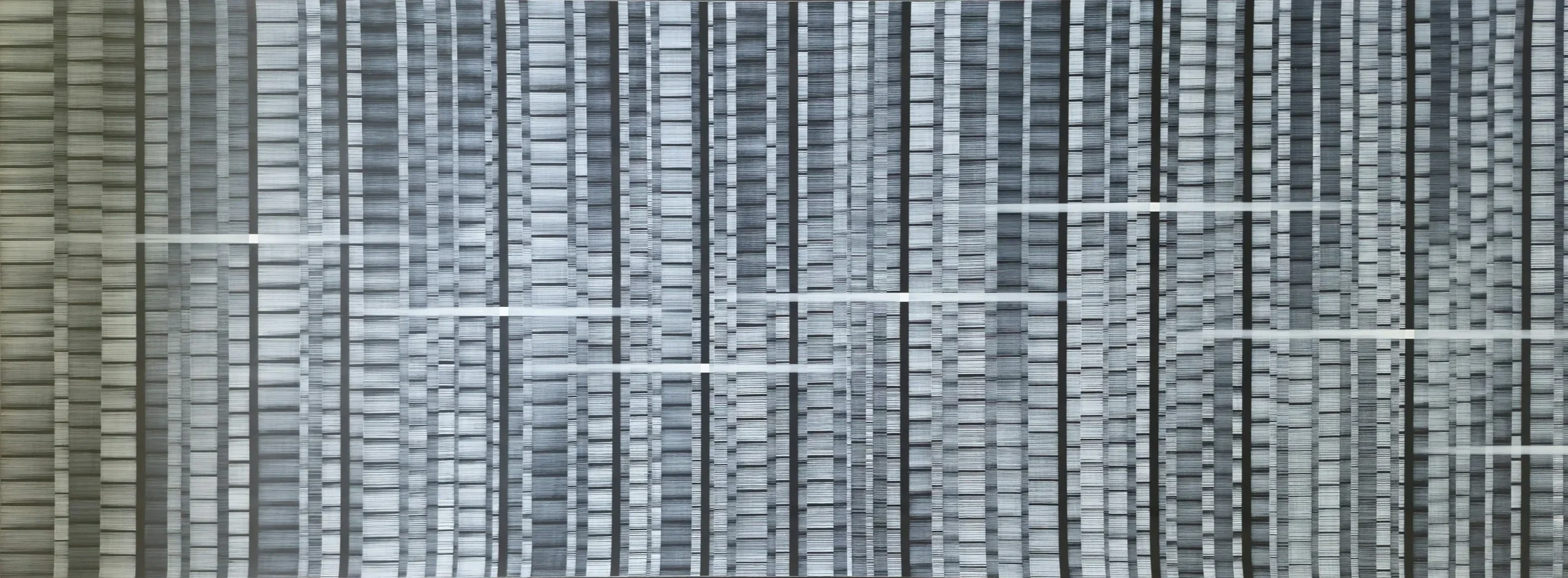
I. Propagation (0.0 – 3.5m)
I. Propagation This opening sequence documents the initial entry of energy into the architectural vacuum. It serves as a dual recording: tracing the first arrival of the winter solstice sunbeam through the Neolithic roof-box, while simultaneously mapping the initial propagation of the 111 Hz standing wave, the monument’s internal acoustic frequency. The above photograph documents the early stages of a "triangular ascent," where solar nodes are plotted at low vertical amplitudes to mirror the entry-level geometry of the stone passage. Through a disciplined binary grid, Wigglesworth establishes the rhythmic cadence of the chambers, capturing the precise threshold where external celestial time begins its transformation into internal resonance.
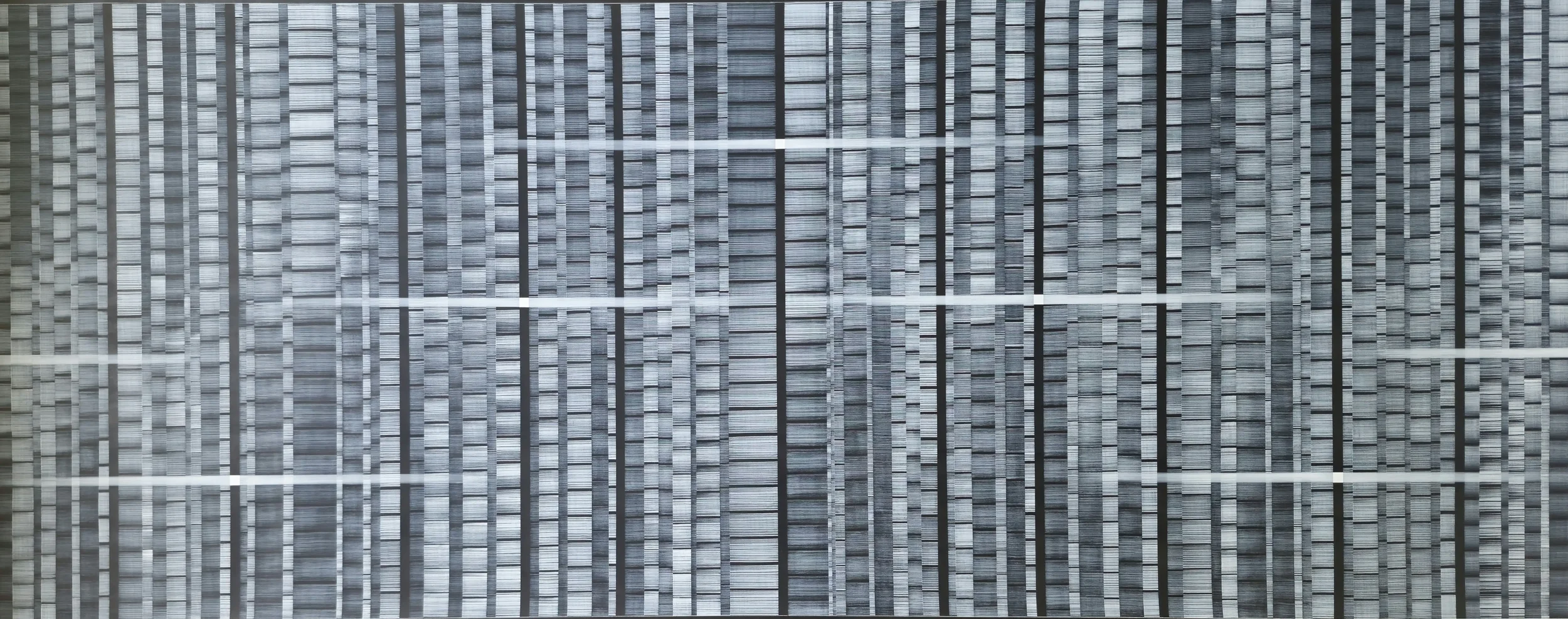
II. Alignment (3.5 – 6.0m)
II. Alignment Advancing toward the 4.75-meter axis, the work reaches its aesthetic and vibrational zenith. As the light sources "climb" the vertical plane, the drawing mirrors the soaring corbelled vaulting of the inner sanctum at Newgrange. This section represents the moment of total synchronicity, where the 17-minute solar alignment and the 111 Hz acoustic pulse reach their maximum amplitude. Utilizing the signature technique of material depletion, the ink records the high-fidelity propagation of this dual wave-form. The observer is invited to physically walk the length of the frequency, witnessing the fleeting energy of the solstice fixed into a permanent, vibrational landscape.
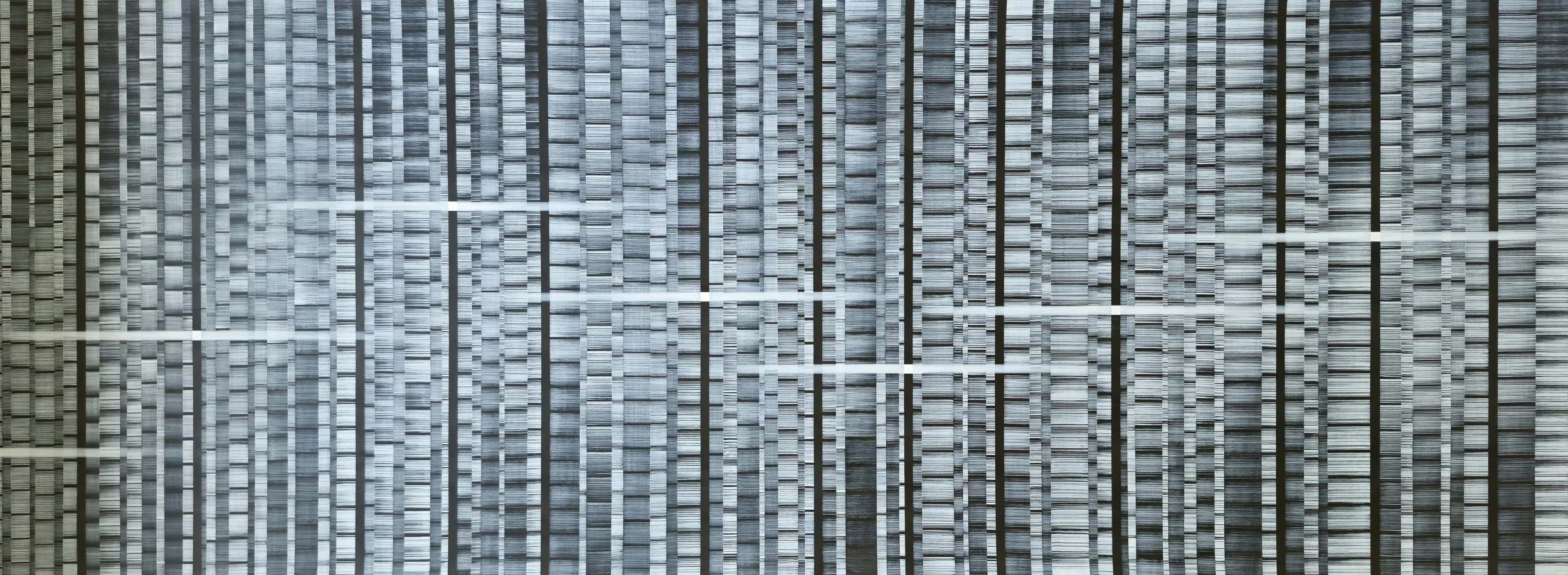
III. Entropy (6.0 – 9.5m)
III. Entropy Leaving the central chambers, the harmonic oscillation begins a measured descent, creating a symmetrical mirror of the initial approach. This final sequence visualises the withdrawal of the solstice light and the fading of the acoustic resonance. As the vertical height of the nodes reduces, the chambers expand in width, reaching their maximum breadth in the final section of the roll. This structural shift embodies the core concept of entropy: as the intensity of the solar beam depletes, the system of expansion increases, reflecting the natural cycle of dissipation. The rigid geometry eventually dissolves back into the silence of the paper, marking the completion of a rhythmic cycle where light, time and material finally reach equilibrium.
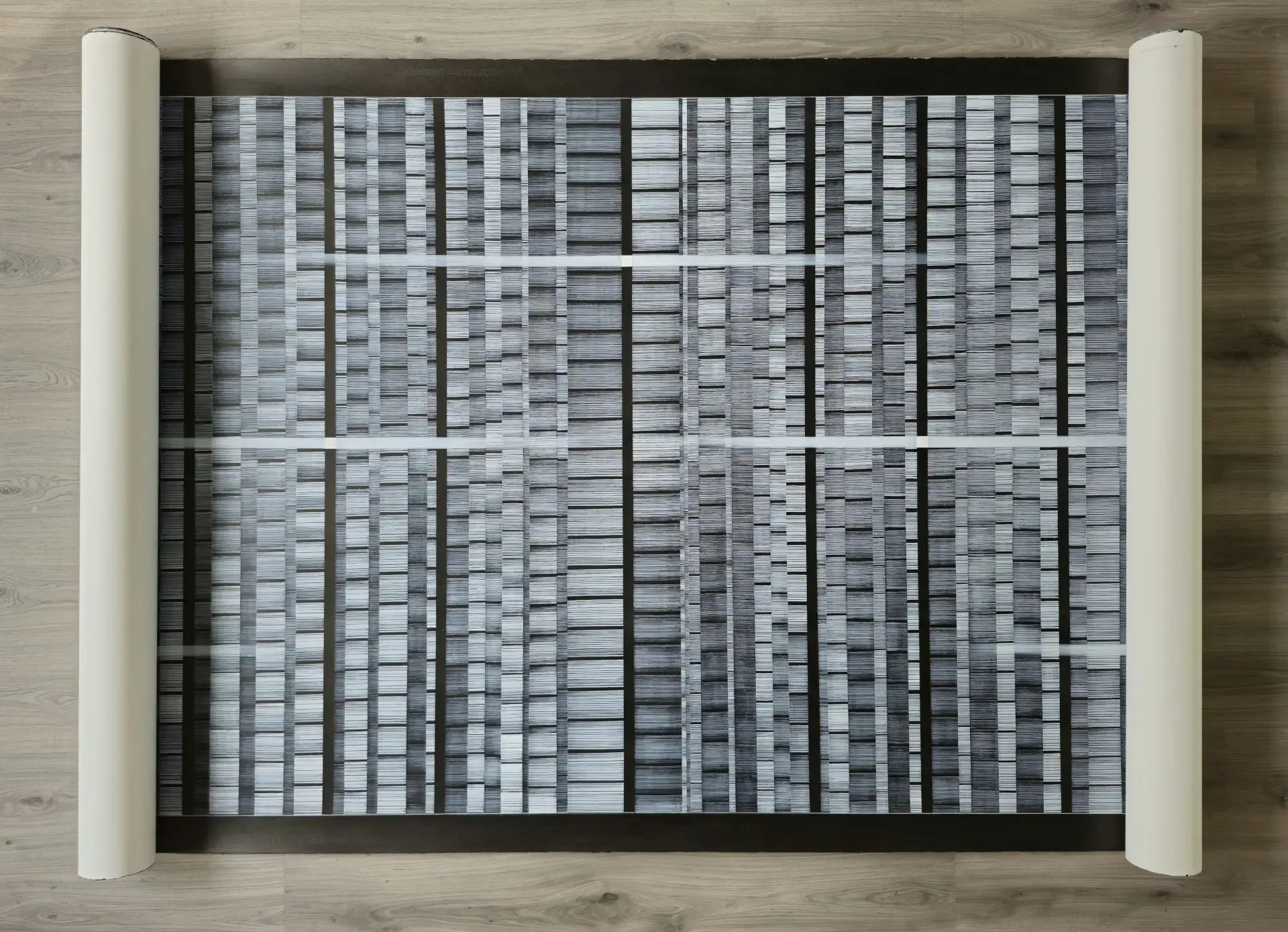
Light Chambers | The Art of Sound: Central Chambers
Light Chambers: The Art of Sound (The excerpt above shows the central portion of the scroll)
Indian Ink on continuous 9.5m Fabriano Artistico roll
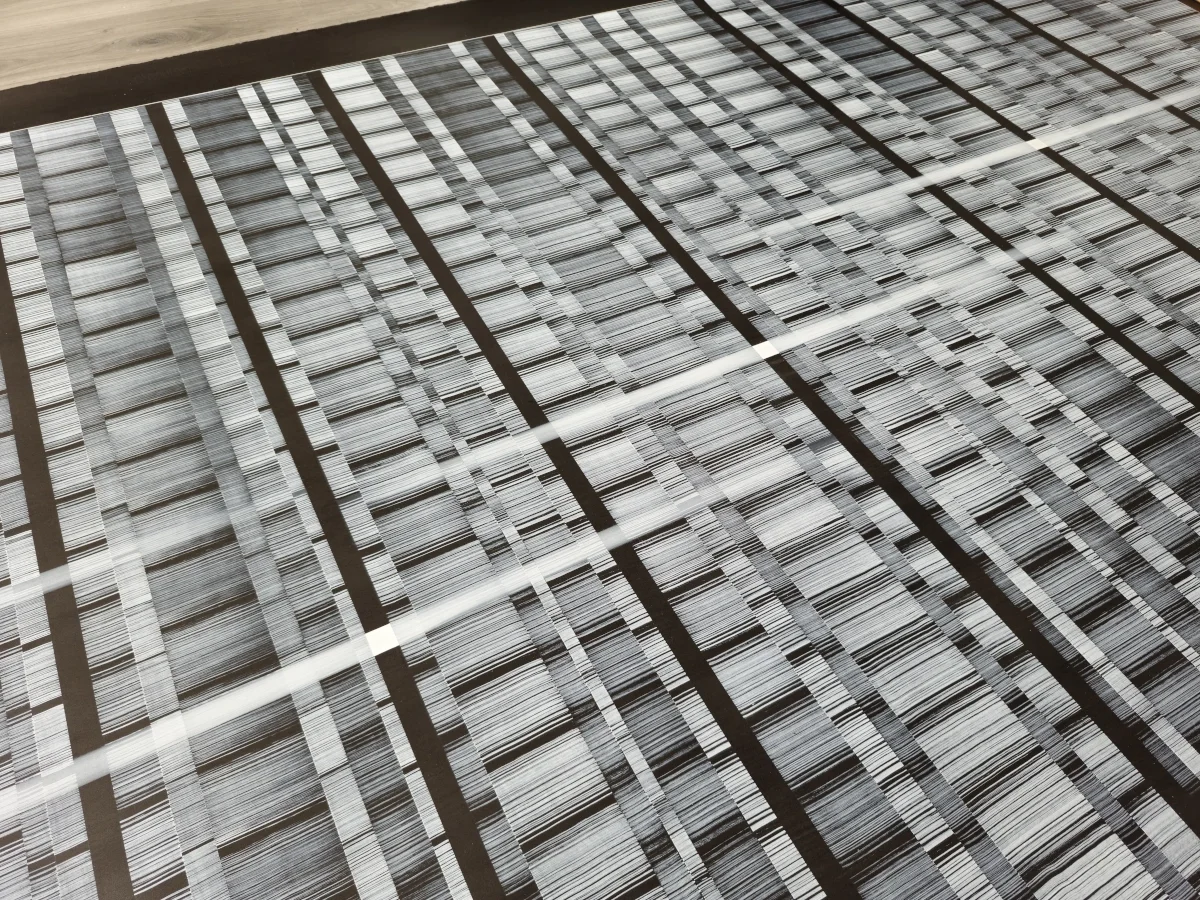
Light Chambers | The Art of Sound: Details shots
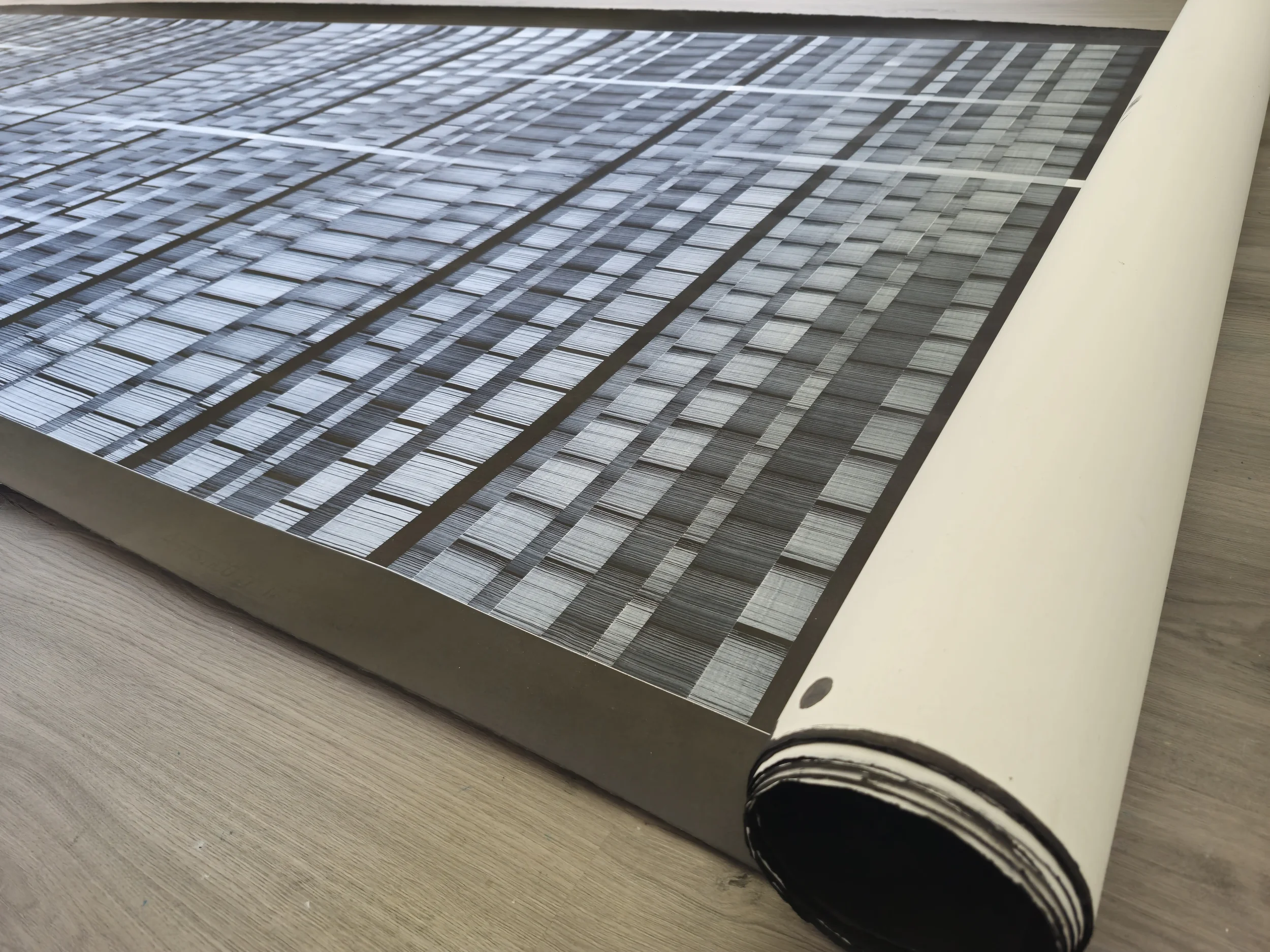
Light Chambers | The Art of Sound: The Scroll
Detail: Light Chambers: The Art of Sound
(The excerpt above highlights a section of the scroll being unrolled),
Indian ink on Fabriano Artistico paper,
141 × 962 cm (full length)